A skyline view from the Metropolitan Government Building in Shinjuku. I highly recommend a visit to this spot for a great photo opportunity. Best of all, it’s completely free unlike Tokyo Tower and Tokyo Skytree.
Tokyo, a City From the Future

A skyline view from the Metropolitan Government Building in Shinjuku. I highly recommend a visit to this spot for a great photo opportunity. Best of all, it’s completely free unlike Tokyo Tower and Tokyo Skytree.
For the past few years, I’ve mostly steered away from reviewing audio interfaces. Recently, I finished migrating all the content on BrianLi.com to this new domain, and it got me thinking about reviewing audio interfaces again, but in a different format. Previously, I thought reviewing audio interfaces was useless and a waste of time for three main reasons.
MUFG Bank:
MUFG Bank, and its wholly owned subsidiary, Banco MUFG Brasil S.A., today announced the signing of a Memorandum of Understanding (MOU) with Banco Bradesco S.A. to collaborate on a new cross-border payment service. Through this MOU, MUFG Bank has decided to start the collaborative development for cross-border payments between Japan and Brazil, utilizing Ripple’s cutting-edge technology. The new payment system — developed by Ripple, a San Francisco-based software vendor — will assist the banks as they work toward commercializing a high-speed, transparent and traceable cross-border payments solution between Japan and Brazil. In 2017, MUFG Bank said it would join Ripple’s interbank group of leading transaction bankers responsible for building, maintaining, and enhancing rules which ensure operational consistency and legal clarity to support the Ripple global payments network.
Ripple has been dominating the Japanese market. A while ago, the San Francisco-based company set up SBI Ripple Asia, a joint venture with SBI Group. SBI Ripple Asia has since formed the Japan Bank Consortium, a group of over 60 Japanese banks that piloted RC-Cloud, a RippleNet-powered payment system. Now, MUFG has revealed it will use RippleNet to power a new payment service targeted at money transfers between Japan and Brazil.
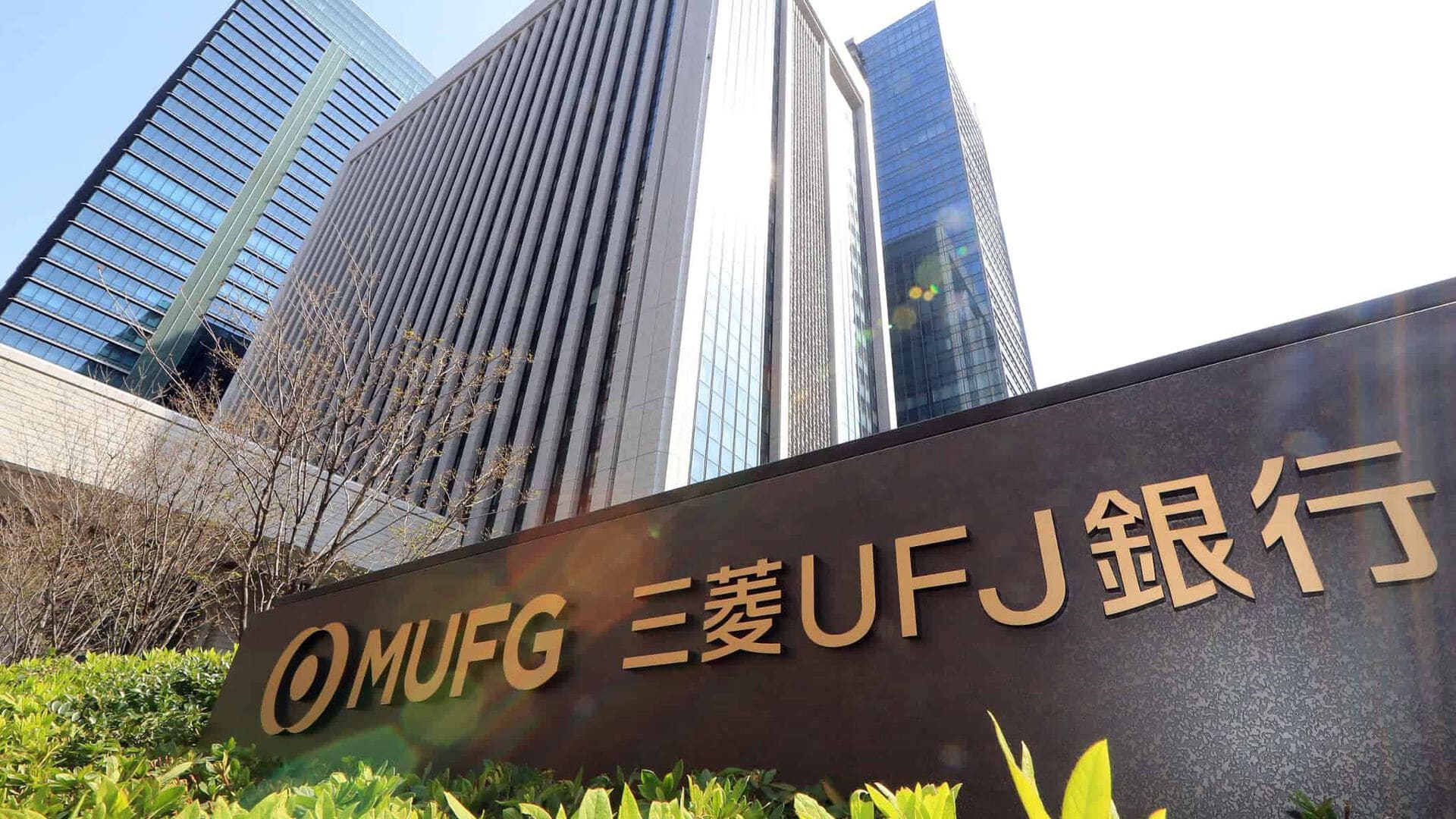
Okay, so why is MUFG a big deal, and why is Japan-Brazil such an important payment corridor? MUFG is the largest bank in Japan and the fifth largest bank in the world. I’m writing this post in a café in Tokyo right now, and there are literally two MUFG locations within viewing distance.
Brazil is home to the world’s largest Japanese population outside Japan. It all started back in the early 1900s in post-Feudal Japan when many rural Japanese families were looking for emigration opportunities due to poverty. At the time, Brazil was experiencing a significant labor shortage after subsidized Italian immigrants started leaving due to poor working conditions. As a result, Japan and Brazil signed an immigration treaty to allow Japanese citizens to emigrate to Brazil. Nowadays, Brazil is home to over 1.6 million people of Japanese descent, many of whom own coffee plantations and regularly conduct business with Japan-based coffee shops and bean providers. If I’ve learned anything from my time living here in Tokyo, it’s that Japanese people love drinking coffee and hanging out at coffee shops.
Knowing this, it’s pretty obvious why MUFG is targeting the Japan-Brazil corridor. The Japanese Yen (JPY) is one of the world’s premier currencies, and the USD/JPY trading pair on Forex markets offers excellent liquidity and low spreads. The same can’t be said about the Brazilian Real, which doesn’t even make an appearance on minor and exotic Forex pairs. Thus, money transfers between Japan and Brazil can be expensive with a 2% to 20% fee according to remittance data from The World Bank.
So, where does Ripple fit in? Well, in its press release, MUFG stated it is interested in “commercializing a high-speed, transparent and traceable cross-border payments solution between Japan and Brazil.” Ripple’s xCurrent, which is intended to be a replacement for SWIFT’s bank messaging service, offers transparency, traceability, and near-instant settlement times.
xCurrent’s speed and cost-savings aren’t exclusively derived from the XRP token, however. xCurrent is an interoperability protocol that has four layers — bidirectional messaging, Interledger Protocol (ILP) ledger, FX ticker, and a transaction validator. When a payment is initiated and agreed upon between A and B, xCurrent will look for a low-cost payment route through liquidity providers connected to ILP. Typically, these ILP-connected entities are nostro and vostro accounts to facilitate FX transactions.
Thus, xCurrent doesn’t require xRapid and the XRP token to function. With that said, I wouldn’t rule out xRapid integration in the future. As stated before, xCurrent still requires banks to hold nostro and vostro accounts. If A wants to send R$20,000 to B, then that amount has to be sitting in a bank account somewhere. Furthermore, xCurrent doesn’t do anything to alleviate counterparty risk. As XRP continues to build liquidity against an increasing number of both fiat and digital assets, I wouldn’t be surprised if something like JPY-XRP-BRL ended up being the cheapest payment route in the future.
The Metropolitan Government Building in Shinjuku on a rather foggy evening.

I hate Adsense, but I believe display ads are a necessity for modern web publishers who wish to monetize their work. Projects like Brave and Coil are working on unobtrusive monetization solutions, but they won’t be ready for mainstream adoption anytime soon. For now, I’ve chosen to stick with a small old fashioned HTML/CSS fixed display ad inspired by Daring Fireball, The Loop, and of course Carbon Ads. I didn’t see any tutorials on how to implement this kind of sponsor ad in WordPress without a plugin, so I decided to share my process in this post.
I took this one a few months ago somewhere in Asakusa.

Yesterday, I spent the afternoon playing around with different ways to display the price of Bitcoin in BrianLi.com’s page header. After I got everything working, I realized forcing the price of Bitcoin on readers is a terrible and stress-inducing idea from a UX perspective. Regardless, here’s the PHP code I used to make it happen.
A few days ago, I was using CryptoFinance to import cryptocurrency prices into Google Sheets. Unfortunately, the import function kept on timing out due to a CoinMarketCap API error. I suspect this has something to do with CMC’s recent move to a tiered API system which limits non-paying users to 6,000 calls per month. After a little research, I discovered the stock =GoogleFinance function supports major cryptocurrency pairs.
My wife and I were taking a late-night walk around Gujo, Japan. I snapped this shot of a boy greeting a man. I'm not sure what their relationship was, but I hope the kid wasn't just coming home from school.

The Boss FS-5L and FS-5U are two popular foot switches for guitarists, keyboardists, and more. The FS-5L is a latching foot switch, while the FS-5U is an unlatching one. In this comparison post, you’ll learn about the differences between these two foot switches and which one to get for your setup.