It was nice to be back in Ginza after spending half the year in the USA.
Walking Around Ginza

It was nice to be back in Ginza after spending half the year in the USA.
The weather was finally cool enough to venture outside our neighborhood this past weekend. We ended up walking around Daikanyama (one of my favorite parts of Tokyo), and found Tempura Motoyoshi. The main location in Minami-Aoyama is famous its tempura, and the Daikanyama location seems to be a dessert-focused popup shop. I ordered the milk ice cream with sweet potato tempura, and it was really good. Highly recommended!

Whether you're a music producer, podcast editor, or filmmaker, learning how to automate effects in your DAW can add a unique and creative touch to your work. For example, automating a saturation plugin that gets harsher over time can bump up your horror movie's creepiness factor. Similarly, automating a rising low cut filter on an EQ plugin can produce a feeling of drifting away. In this tutorial, you'll learn how to automate effects in Logic Pro X.
If you're a content creator, there may be some situations where you need to convert HTML to Markdown. While there are a ton of online HTML to Markdown conversion tools like Turndown, it's much faster to perform the conversion locally on your computer – especially if you have to process a lot of files. In this article, you'll learn how to convert HTML to Markdown in Python.
Like many, I have a love-hate relationship with Medium. I'm a huge fan of Medium's editor - to the point of migrating my entire site to the platform a few years ago when custom domains were supported. At the same time, I hate how Medium dropped custom domain support, and how tech companies have flocked to it to host official company blogs. Companies like Auth0, ICON, and Airbnb all host blogs on a medium.com domain.
Apple MainStage is the industry-leading app for live performers. It allows musicians to design and organize sound patches, apply effects to audio in realtime, map hardware to control VSTs, and more. MainStage also comes with a large assortment of stock plugins and sound libraries, all for the low price of $29. MainStage, like other Apple-developed software, is only available for macOS. In this post, we'll discuss how to run Apple MainStage on a PC, and take a look at other PC alternatives to MainStage.
If you're a music producer, reversing audio can be a useful technique to create unique effects and soundscapes. In this tutorial, you'll learn how to easily reverse audio in Logic Pro X.
Logic Pro and MainStage are two popular apps for musicians, engineers, producers, and more. While both apps are made by Apple and targeted towards users in the music industry, they also have their fair share of differences. In this post, we'll compare and contrast Logic Pro and MainStage, so you can decide which app is best for your use case.
Back in college, I spent a lot of time researching Universal Audio interfaces and plugins. As a music recording student, I was acutely aware of the advantages of zero-latency DSP processing. At school, the recording studio was equipped with a high-end Pro Tools rig with a variety of hardware outboard gear, so there was no need to track with plugins.
Working on my own projects at home was a different story – I didn't have a decked out studio at home. At the time, I was doing a lot of work with vocalists, so I wanted an audio interface with DSP capabilities. Universal Audio products were out of my price range, so I used a Focusrite Saffire Pro 24 DSP. It offered basic EQ, compression, and reverb effects through the onboard DSP chip, and it was good enough for tracking purposes.
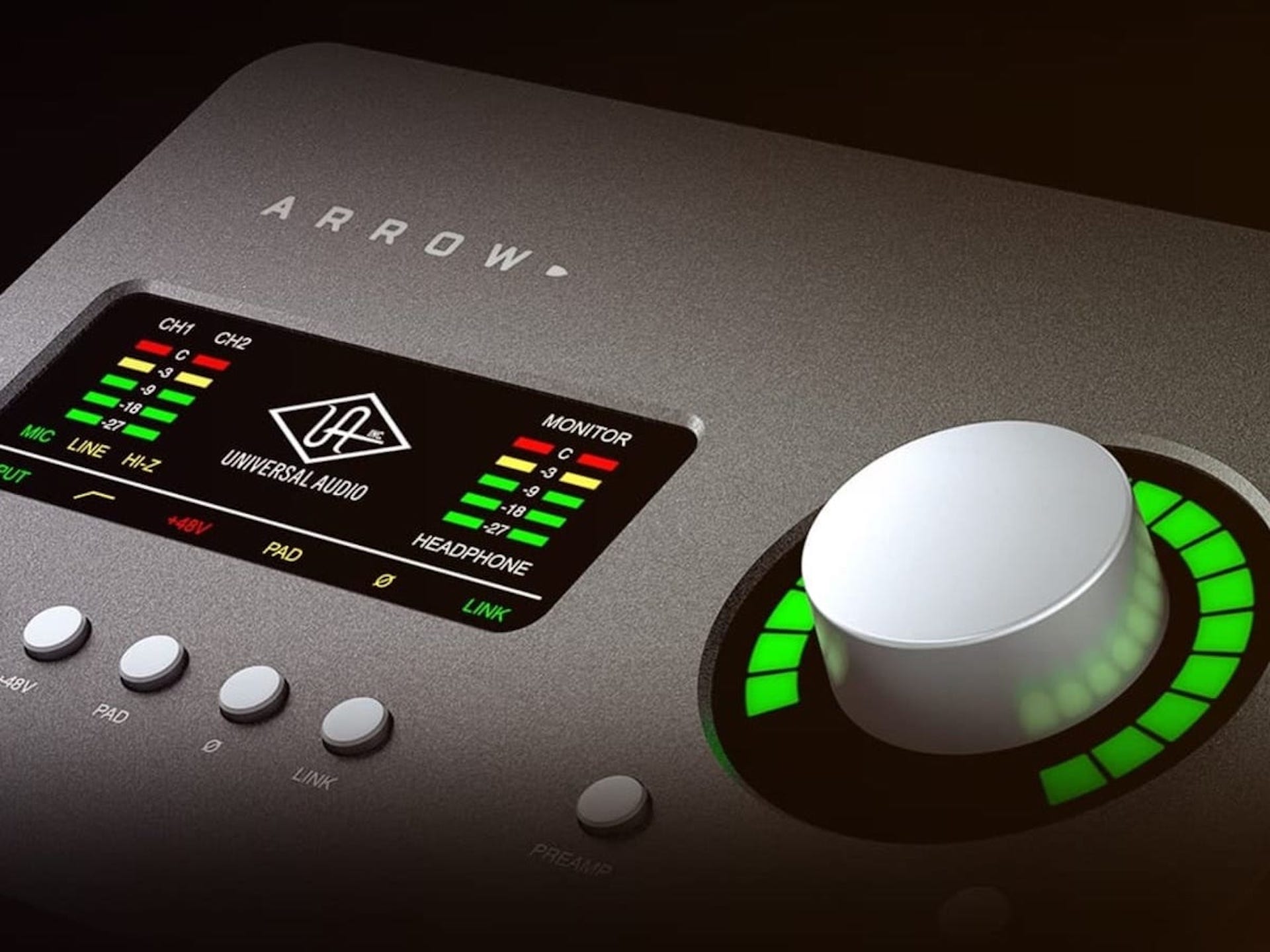
Fast forward to 2020 – I finally picked up my first Universal Audio interface! I decided on the UAD Arrow because it's a super portable and powerful unit at an attractive price. Right now, I mainly use it for podcasting, though I hope to get back to recording vocalists and producing music when life returns to normal. Right now, my favorite Universal Audio plugins are the Neve 88RS channel strip, 1176 compressor, and LA-2A limiter/compressor.
I really like this signal chain for podcasting. The Neve channel strip sounds amazing, and the included gate is great for reducing background noise. The 1176 and LA-2A are dynamics processing staples, and I use them heavily to get a broadcast-ready sound. Since all the effects are provided by the onboard DSP chip with zero latency, I don't have to worry about messing around with plugins during post-production. After using Universal Audio's stuff for a few weeks, I'm hooked. The presence of DSP chips and the impeccable emulations of vintage hardware is a combination that's impossible to beat.
Twenty years ago, the world of music production was dominated by romplers like the Roland JV-1080 and Yamaha MOTIF. The MOTIF Classic, which was originally released in 2001, had only 84 MB of onboard waveform ROM (read-only memory). Fast forward to 2020, the music production landscape has changed dramatically. Spectrasonics Omnisphere, a popular sample library among pop producers and film composers, weighs in at over 60 GB – that's ~715x the size of the MOTIF's onboard memory.